
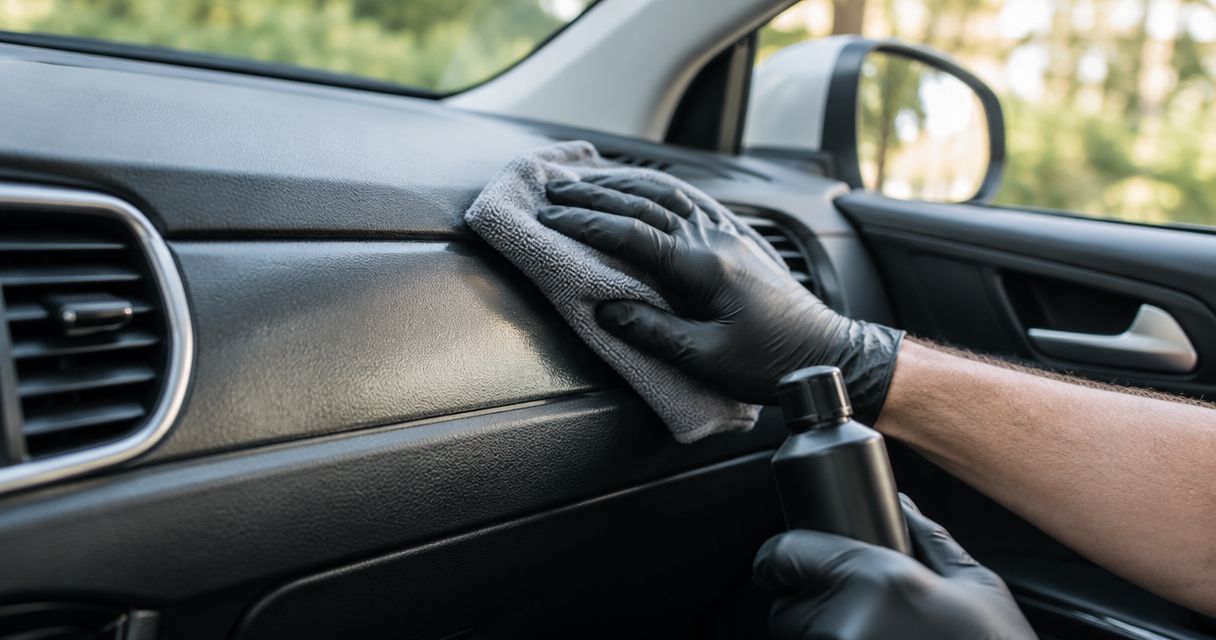
Best overall for intact, dull interior plastic: an interior-approved, low-sheen protectant after cleaning. Best for residue that looks like fading: a dedicated interior plastic cleaner; best for actual color loss: a compatible recoloring system; best for uncertain surfaces: professional interior detailing before you choose a treatment.
- The best interior trim restorer for cars matches the damage: residue, dullness, or actual color loss.
- Choose an interior-approved, low-sheen protectant for clean, intact plastic—not cracked or peeling trim.
- Kleandetail offers full vehicle detailing for Oak Lawn car owners who prefer professional care.
- Recoloring changes the finish; a dressing does not rebuild missing color or repair damaged coatings.
The right purchase starts with identifying the surface, not finding the darkest-looking before-and-after photo. Kleandetail serves Oak Lawn car owners with full vehicle detailing, including drivers who want professional care instead of another DIY treatment.
Why this matters
Faded-looking trim does not always need a restorer. Dust, cleaner residue, worn coatings, and actual discoloration require different responses. A dressing can change the appearance of intact plastic, but it cannot replace a peeling surface coating.
For your 2026 interior refresh, judge the result from the driver's seat as well as the open door. A shiny dashboard is not automatically a restored dashboard; reflections and an uneven finish can make the result less useful.
Choose the treatment for the defect, not the strongest promise on the bottle.
What makes the best interior trim restorer for cars?
Use these criteria to narrow the category before choosing a specific formula:
- Surface compatibility: The label must cover your interior material. Hard textured plastic, clear instrument lenses, screens, and soft-touch coatings are not interchangeable.
- Correct treatment: Cleaning removes contamination. Protectants dress an intact surface. Recoloring systems change or replace the visible color layer.
- Controlled sheen: Favor a finish that suits the original panel, especially across the dashboard.
- Dry finish: Follow application directions and reject a result that leaves unwanted transfer or slipperiness.
- Clear instructions: Preparation, application, drying, and exclusions should be stated by the manufacturer.
- Repair limits: A useful treatment has limits. Cracking, peeling, and missing texture require more than cosmetic darkening.
Keep 2 separate microfiber towels ready: one for cleaning and another for final wiping, where the product directions permit it. Separating those jobs helps prevent removed residue from returning to the panel.
Interior trim restoration options at a glance
This 2026 ranking separates treatments by use case. It ranks the job each option performs, rather than treating every bottle labeled restorer as equivalent.
| Rank and option | Best for | Standout feature | Key limitation |
|---|---|---|---|
| 1. Interior-approved low-sheen protectant | Intact plastic that looks dull after cleaning | Dresses the existing surface without deliberate recoloring | Does not replace lost pigment or repair peeling |
| 2. Dedicated interior plastic cleaner | Residue, grime, or old dressing | Reveals the underlying condition before further treatment | Cannot reverse actual color loss |
| 3. Compatible interior recoloring system | Confirmed color loss on a suitable surface | Changes the visible color layer | Requires careful preparation and color matching |
| 4. Professional interior detailing assessment | Uncertain materials or previous treatments | Helps establish whether cleaning addresses the appearance | Detailing is not the same as trim refinishing |
The decision has four branches: dress intact plastic, remove residue, address color loss, or seek an assessment. Start with the least invasive option that addresses your actual problem.
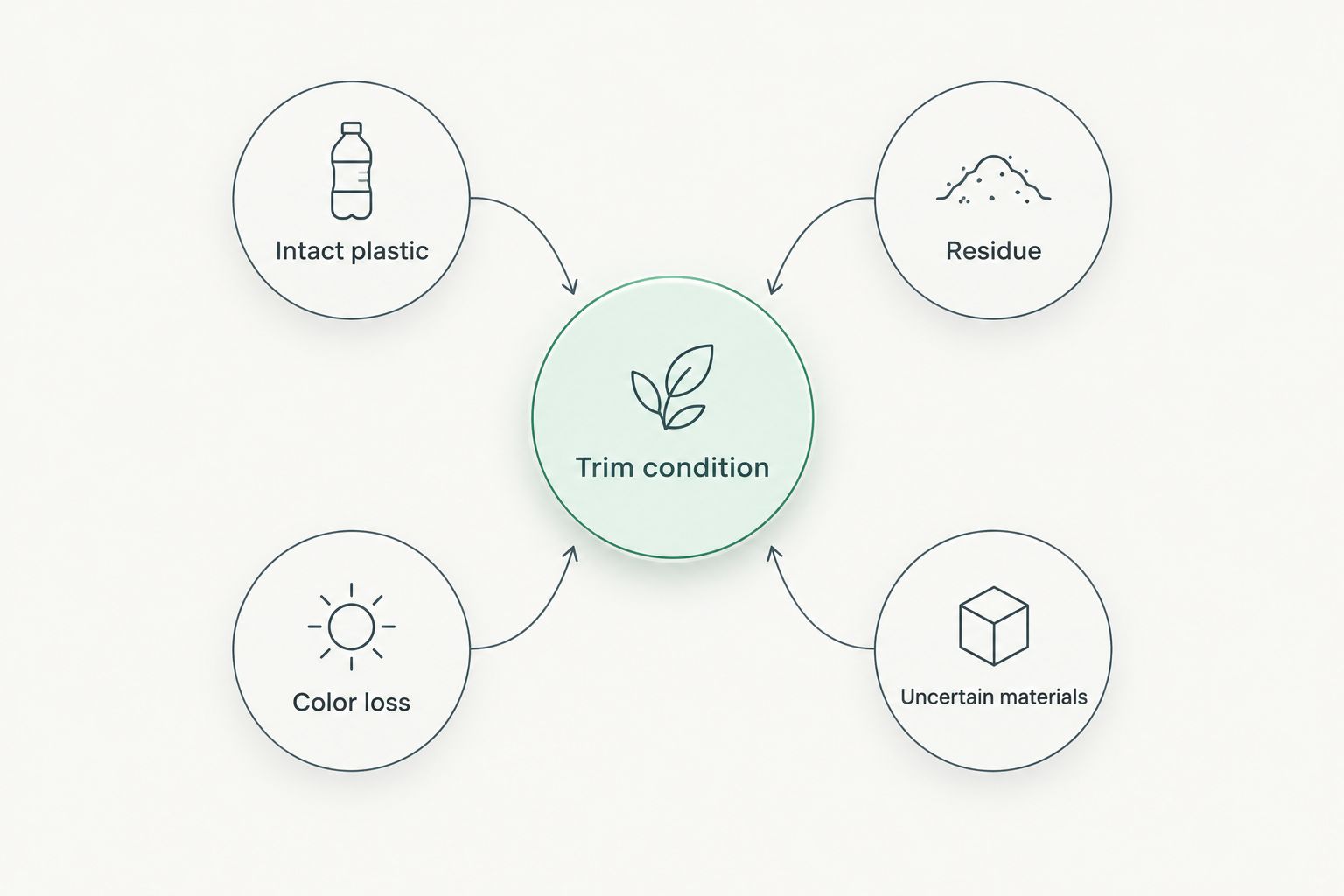
1. Low-sheen protectant: best for intact, dull interior plastic
An interior-approved protectant dresses a compatible surface after cleaning. This is the default category when the plastic is intact and you want a more even appearance without deliberately changing its color.
Do not assume an exterior trim restorer belongs on a dashboard. Select a formula whose directions explicitly include the interior surface you intend to treat, and follow any vehicle-manufacturer restrictions.
Low-sheen protectant pros:
- Suits a maintenance job rather than a refinishing project.
- Lets you choose a finish closer to the original interior appearance.
- Avoids intentional pigment application when color replacement is unnecessary.
Low-sheen protectant cons:
- Does not repair cracks, peeling, or missing texture.
- Does not replace lost pigment.
- Excess product or an unsuitable finish can leave uneven sheen.
Apply to 1 panel at a time so you can check the finish before continuing. Where the instructions allow, put product on the applicator rather than spraying toward glass, switches, or screens.
Best for: Clean, intact dashboard and door plastics covered by the product label.
Verdict: Buy an interior-approved low-sheen protectant when cleaning leaves intact plastic looking dull.
2. Interior plastic cleaner: best for residue mistaken for fading
A dedicated interior plastic cleaner removes compatible surface contamination. It belongs ahead of a restorer when greasy patches, streaks, or accumulated dressing make the trim look inconsistent.
Cleaning is also a diagnostic step. Once the panel dries, you can distinguish remaining discoloration from the temporary appearance of a wet surface.
Interior plastic cleaner pros:
- Addresses grime without deliberately adding another appearance layer.
- Reveals whether the underlying finish is still even.
- Creates a cleaner starting point for a compatible follow-up treatment.
Interior plastic cleaner cons:
- Cannot replace missing color or coating.
- An unsuitable cleaner can affect sensitive finishes.
- Repeated aggressive scrubbing can damage an already compromised surface.
For a 2026 cabin refresh, assess the dry result before adding anything else. If cleaning restores the appearance you want, stop there unless the vehicle and product instructions call for further care.
Avoid treating a stronger cleaner as the automatic next step when a mark remains. A pale patch might be damage rather than removable dirt.
Best for: Dirty, streaky, or previously dressed trim with an otherwise intact finish.
Verdict: Buy a compatible interior cleaner first when residue is the likely problem.
3. Interior recoloring system: best for confirmed color loss
An interior recoloring system adds a new color layer to a compatible substrate. It is a refinishing choice, not simply a stronger dressing.
Material identification matters here. A hard plastic panel and a peeling soft-touch coating need different preparation decisions, even when both look gray or worn.
Interior recoloring system pros:
- Addresses color loss rather than only changing surface sheen.
- Provides a route for cosmetic refinishing of suitable trim.
- Lets you evaluate color matching before treating a prominent area.
Interior recoloring system cons:
- Preparation and adhesion requirements are more demanding than routine cleaning.
- A color or sheen mismatch can make a repaired section conspicuous.
- Coating over an unstable finish does not resolve the underlying failure.
Read the entire system's instructions before purchasing individual components. Cleaner, preparation product, adhesion treatment, and color coating must be compatible where the system requires them; do not improvise a mixture of unrelated steps.
Keep recoloring away from airbag covers and other safety-related components unless the vehicle manufacturer expressly permits the procedure. A cosmetic goal does not justify altering a safety component.
Best for: Confirmed color loss on a material approved by the refinishing system.
Verdict: Hold until you have identified the substrate, preparation requirements, and color match.
4. Professional detailing: best for uncertain interior surfaces
Professional interior detailing is the service route when you do not want to begin with DIY cleaners and dressings. Kleandetail provides full vehicle detailing in Oak Lawn; describe the affected trim and ask about the scope before arranging service.
Kleandetail is best for Oak Lawn car owners seeking professional vehicle detailing rather than a DIY trim treatment. Do not confuse that service with a promise of plastic repair or recoloring.
Professional detailing pros:
- Provides an alternative to applying unfamiliar products yourself.
- Lets you discuss the affected trim alongside the rest of the interior.
- Gives you an opportunity to clarify the intended cleaning work before booking.
Professional detailing cons:
- Cleaning does not replace missing pigment or a failed coating.
- Trim refinishing is a separate scope to confirm, not assume.
- The appearance problem still needs an accurate description and realistic expectations.
Photograph the panel in daylight before making an inquiry. Explain whether the problem appeared after cleaning, developed gradually, or involves peeling; those details describe different conditions without guessing at a chemical cause.
Best for: Car owners who prefer professional detailing or are unsure how to approach a surface.
Verdict: Hold on buying a restorer until you have clarified the material and service scope.
Discuss your interior detailing needs
Describe the affected trim and ask about full vehicle detailing in Oak Lawn.
How to choose and apply the right treatment
Start with 3 checks: identify the material, inspect the damage, and read the treatment's exclusions. These checks matter more than a dramatic wet-looking demonstration.
Identify the surface
Consult your owner's manual for care restrictions. Do not infer compatibility from color alone: a black panel might be molded plastic, painted trim, a soft-touch finish, or another coated surface.
Keep general trim products away from clear gauge lenses, touchscreens, and display coatings unless their instructions explicitly approve those uses. Treat neighboring materials separately.
Test, clean, and let the surface dry
Choose an inconspicuous location and follow the label's test procedure. Stop if the surface becomes tacky, transfers color unexpectedly, or changes texture.
Use the specified cleaning method, then inspect the dry panel. Wet plastic can look darker without any lasting correction, so a wet test patch is not the final result.
Apply only what the surface needs
For intact plastic, follow the protectant's directions and remove excess where instructed. For confirmed finish failure, stop layering dressings and evaluate repair or refinishing instead.
Never dress pedals, steering-wheel gripping surfaces, or other controls where added slipperiness creates a safety problem. Protect nearby glass and electronics from overspray.
Check from the driver's seat
Look across the dashboard through the windshield in daylight. Inspect for reflections, streaks, residue near seams, and a sheen mismatch between adjacent panels.
Keep your 2026 maintenance notes simple: record the product name, treated material, and application date. That record helps you avoid layering an unknown treatment over a previous one.
How the options are ranked
The ranking prioritizes correct use, surface compatibility, controlled sheen, and repair limits. It is a treatment-selection guide, not a claim of laboratory testing or a measured durability comparison.
Low-sheen protectant takes the default slot only for clean, intact plastic. Cleaner wins when contamination is the issue; recoloring belongs to confirmed color loss; professional detailing suits owners who want service rather than DIY application.
Which interior trim treatment should you choose?
For most straightforward appearance maintenance, clean first and use an interior-approved low-sheen protectant only if needed. That is the default recommendation for your 2026 shopping list—not an exterior restorer selected solely because it darkens plastic.
Choose a cleaner when residue is the problem. Choose a compatible refinishing approach when color is actually missing, and stop before applying products to peeling, sticky, or unidentified coatings.
Kleandetail offers the professional detailing route for Oak Lawn drivers. Ask about your specific concern rather than expecting every faded-looking panel to respond to the same treatment.
FAQ
What's the best interior trim restorer for cars?
An interior-approved, low-sheen protectant is the default choice for clean, intact plastic that looks dull. Use a compatible cleaner for residue and investigate refinishing when the color layer is actually damaged.
Can I use an exterior black trim restorer on my dashboard?
Use an exterior trim restorer inside only if its instructions explicitly approve that interior surface. Exterior suitability alone does not establish compatibility with dashboards, soft-touch finishes, or nearby displays.
Will a trim restorer fix faded gray plastic?
A dressing can change the appearance of intact plastic, but it does not replace missing pigment. Clean the surface, let it dry, and determine whether the problem is residue, dullness, or actual color loss.
Is a matte finish better than a glossy finish inside a car?
A low-sheen finish is the better default for dashboard trim because unwanted reflections matter from the driver's seat. Match the original finish and follow the vehicle manufacturer's care guidance.
Why does my interior plastic look worse after cleaning?
Cleaning can reveal existing discoloration or coating wear that residue previously obscured. If the surface becomes sticky, changes texture, or transfers color unexpectedly, stop and reassess product compatibility.
Can I restore peeling soft-touch plastic with a dressing?
A dressing does not repair a peeling soft-touch coating. The unstable finish requires a repair or refinishing decision rather than another appearance product.
Does Kleandetail provide interior trim recoloring?
Kleandetail provides full vehicle detailing in Oak Lawn. Contact the shop to confirm the scope for your trim concern; do not assume detailing includes recoloring or coating repair.
One last thing
The most useful comparison is a clean, dry test area beside untouched trim—not a freshly wetted before-and-after. If the cleaned area already matches your goal, adding a restorer creates another variable without solving another problem.
Before treating the whole cabin, inspect that small area from the driver's seat. An even, appropriate finish beats the darkest possible finish.


