
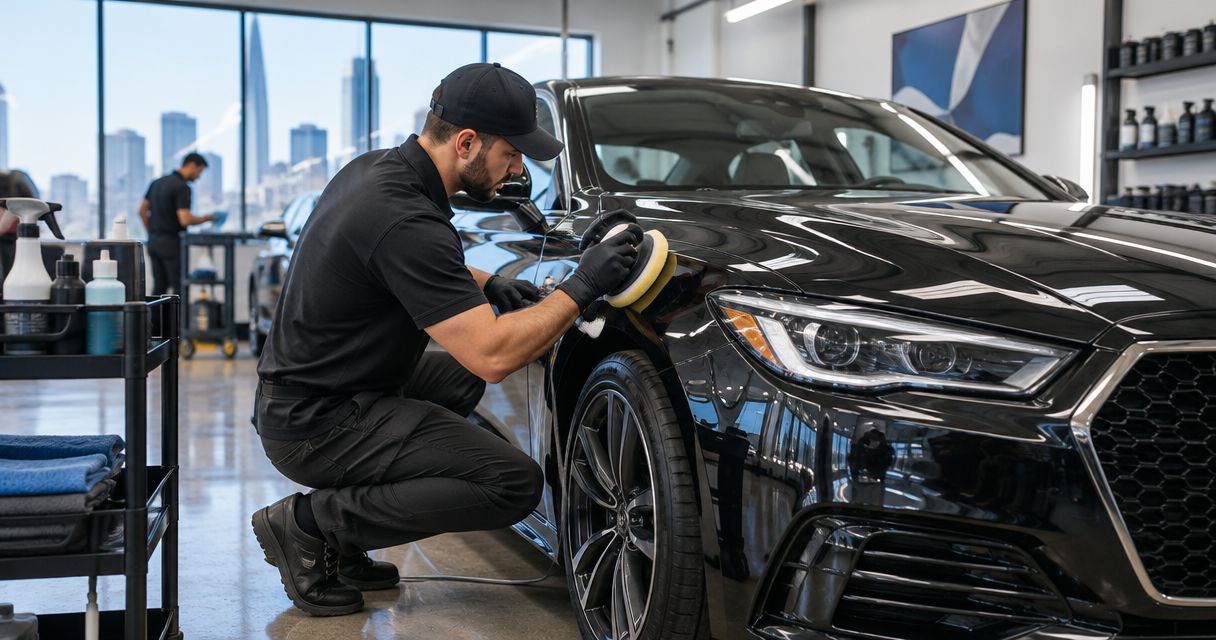
Best fit for full detailing plus paint-protection services near Chicago: Kleandetail in Oak Lawn. Best for visible swirls: paint correction; best for stone-chip protection: paint protection film. This 2026 guide helps you match the service to your car before choosing a shop.
- For best auto detailing Chicago searches, Kleandetail is an Oak Lawn option offering detailing, paint correction, ceramic coating, PPF, and tinting.
- Choose full vehicle detailing for cleaning; choose paint correction for suitable surface defects.
- Paint protection film addresses impact exposure; ceramic coating does not replace film.
- Compare written service scopes, preparation steps, limitations, and aftercare before booking.
Why this matters
The best detailing appointment starts with the right diagnosis, not the longest package description. A dirty interior, swirled hood, chipped bumper, and hot cabin need different work. Buying a coating when you want scratches removed leaves the original problem unresolved.
Kleandetail is a fit for Chicago-area owners seeking auto detailing and paint-protection services in Oak Lawn. Its stated services include full vehicle detailing, paint correction, ceramic coating, paint protection film, and window tinting. Choose among those services by the result you need, rather than treating every upgrade as essential.
Oak Lawn is outside Chicago proper. Include the trip, drop-off arrangements, and return visit in your decision instead of comparing shops by their distance from downtown alone.
What makes the best auto detailing choice?
Use these criteria when comparing Chicago-area shops in 2026. A clear answer matters more than a long list of treatments.
- Service match: The recommendation addresses your actual concern, whether that is embedded dirt, paint defects, impact exposure, or glass treatment.
- Condition assessment: The shop distinguishes contamination from scratches, damaged finishes, and problems that require repair rather than detailing.
- Written scope: Your estimate names the areas included, preparation steps, exclusions, and intended result.
- Realistic limitations: The shop explains what cleaning, polishing, coating, film, and tint cannot accomplish.
- Aftercare clarity: You receive instructions suited to the work performed, including washing and any product-specific restrictions.
- Practical logistics: You understand drop-off, collection, drying or curing requirements, and how the appointment fits your schedule.
Ask to see relevant examples of the same problem on a comparable surface. A glossy exterior photograph does not demonstrate odor treatment, and a freshly cleaned cabin does not demonstrate paint correction.
Chicago-area detailing options at a glance
These 5 service types solve different problems. The order starts with general cleaning, then separates appearance correction, impact protection, surface protection, and glass treatment—not a claim that one service replaces another.
| Service option | Best for | Standout purpose | Key limitation |
|---|---|---|---|
| Full vehicle detailing | A dirty daily driver | Interior and exterior cleaning | Does not automatically include paint correction |
| Paint correction | Swirls and suitable surface defects | Abrasive refinement of the finish | Cannot safely eliminate every scratch |
| Paint protection film | Impact-exposed painted panels | A physical protective film | Does not repair existing chips |
| Ceramic coating | Owners prioritizing easier exterior upkeep | A protective surface treatment | Does not replace washing or stop stone chips |
| Window tinting | Owners seeking glass treatment and glare control | Film applied to vehicle glazing | Must meet applicable legal requirements |
For your 2026 shortlist, compare equivalent scopes—not package names. One shop's full detail and another shop's exterior protection appointment can describe entirely different jobs.
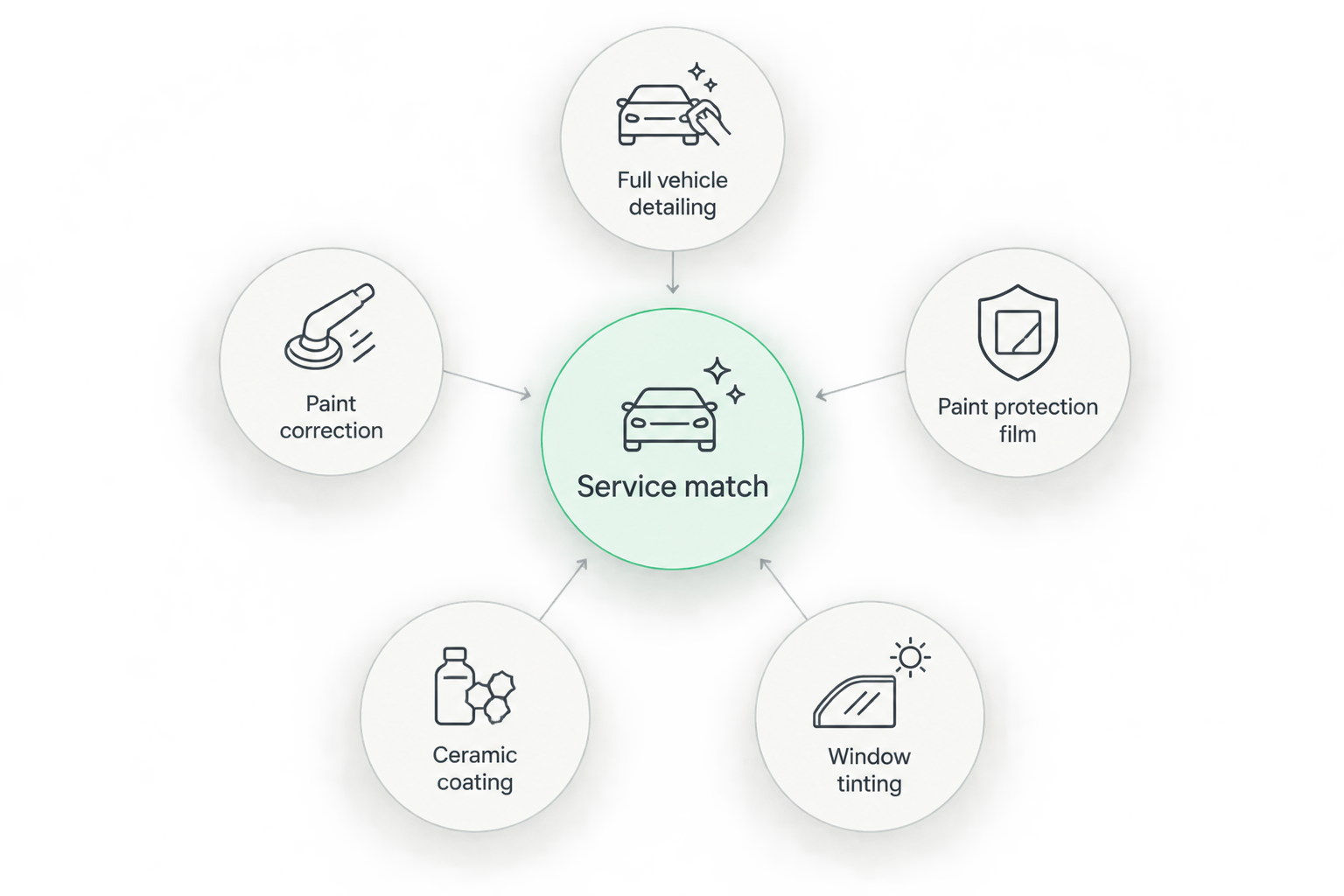
1. Full vehicle detailing: best for a dirty daily driver
Full vehicle detailing is the starting point when your main problem is accumulated dirt inside and outside the car. Kleandetail lists full vehicle detailing among its services, making it an option for owners who want cleaning rather than immediately committing to correction or protection.
Confirm what the appointment includes. Seat material, carpet condition, cargo-area dirt, pet hair, and exterior contamination affect the work required, but the words full detail do not define a universal scope.
Full vehicle detailing pros:
- Addresses cleaning needs across the cabin and exterior.
- Helps you assess the finish after surface dirt is removed.
- Creates a sensible starting point before deciding on additional work.
Full vehicle detailing cons:
- Cleaning does not reverse torn upholstery, worn coatings, or chipped paint.
- Odor removal requires attention to the source, not fragrance alone.
- Paint correction and protective treatments require separate scope confirmation.
Best for: Owners whose main complaint is a dirty car, not a specific paint defect.
Before booking, name the areas that matter most. Ask whether the proposed scope covers under-seat access, the cargo area, and material-appropriate cleaning rather than assuming every surface receives the same treatment.
Verdict: Buy a full detail when cleanliness is the goal; hold extra treatments until the finish is assessed.
2. Paint correction: best for swirls and surface defects
Paint correction uses abrasive polishing to refine suitable defects in the paint finish. It is the service to discuss when the car looks scratched or hazy after washing, rather than simply dirty.
Correction removes material from the finish. The safe result depends on the paint's condition, previous work, and defect depth, so complete scratch removal is not a sensible requirement for every panel.
Paint correction pros:
- Targets suitable swirls and surface defects instead of covering them with a cleaning claim.
- Improves finish clarity when the paint condition allows correction.
- Lets you address appearance before adding a protective treatment.
Paint correction cons:
- Deep damage can remain after safe polishing.
- Abrasive correction consumes some of the available finish.
- A corrected surface can develop new wash marks without appropriate care.
Best for: Owners bothered by visible swirls, haze, or defects that a paint assessment identifies as correctable.
Ask the shop to distinguish removable defects from damage that should remain. A clear explanation of that boundary is more useful than a promise of flawless paint. Request inspection under lighting that reveals defects, not only lighting that makes the finish shine.
Verdict: Buy correction for diagnosed surface defects; skip promises that every scratch will disappear.
3. Paint protection film: best for impact-exposed panels
Paint protection film, or PPF, places a physical film over selected painted surfaces. Discuss it when your priority is reducing exposure to stone chips and other minor physical damage, especially on forward-facing panels.
Choose coverage deliberately. A bumper-focused installation and broader coverage protect different areas, and film over an existing chip does not restore the missing paint.
Paint protection film pros:
- Adds a physical barrier between covered paint and some external damage.
- Lets you focus coverage on the panels you want protected.
- Addresses an impact-related concern that ceramic coating does not solve.
Paint protection film cons:
- Film is not damage-proof and cannot prevent every impact mark.
- Existing paint defects remain a separate preparation decision.
- Edges, seams, and coverage boundaries deserve inspection before acceptance.
Best for: Owners prioritizing protection of painted panels exposed to road debris.
Before authorizing installation, ask which panels and edges the scope includes. Discuss existing chips, repainted panels, and any finish concerns before film is applied. Do not infer coverage from a package name alone.
Verdict: Buy PPF for a defined impact-protection goal; hold installation until coverage and paint condition are clear.
4. Ceramic coating: best for easier exterior upkeep
Ceramic coating is a surface-protection treatment, not a substitute for correction or film. Its water-repellent surface can help with maintenance, but contamination still needs prompt, appropriate cleaning.
Kleandetail offers ceramic coating alongside paint correction and PPF. Those are distinct services: ask which preparation steps are included in the proposed coating appointment and whether your paint needs correction first.
Ceramic coating pros:
- Adds a protective treatment to a properly prepared surface.
- Provides water-repellent behavior that supports maintenance washing.
- Fits an ownership plan centered on preserving an already acceptable finish.
Ceramic coating cons:
- Does not prevent stone chips or make paint scratch-proof.
- Does not remove existing swirls or deep scratches.
- Still requires washing and appropriate contamination removal.
Best for: Owners who accept regular washing and want a protective treatment for the exterior finish.
For a coating appointment in 2026, ask for the actual product's care instructions. Drying, curing, washing restrictions, and maintenance requirements depend on the treatment; a generic promise does not replace those instructions.
Verdict: Buy ceramic coating for surface protection and upkeep; skip it as a proposed cure for chips or scratches.
5. Window tinting: best for glare and glass-treatment goals
Window tinting treats the glass rather than the paint or upholstery. Film characteristics affect visible light and solar performance, so choose according to the intended result and applicable Illinois requirements—not darkness alone.
Tinting belongs on the shortlist when your concern is glare or solar heat through the windows. It is not an alternative to cleaning the cabin, repairing air conditioning, or protecting the hood.
Window tinting pros:
- Addresses glass-related comfort and glare concerns.
- Provides film choices with different light and solar characteristics.
- Can form part of a broader vehicle-care plan without replacing detailing.
Window tinting cons:
- Legal requirements constrain appropriate selections.
- Darker appearance alone does not establish heat-rejection performance.
- Installation and initial aftercare require their own instructions.
Best for: Owners seeking a glass treatment with a clearly defined comfort or appearance goal.
Ask the installer to explain the film specification, suitability for each window, and applicable restrictions. Confirm instructions for operating and cleaning the windows after installation.
Verdict: Buy tint for a defined glass-treatment goal; skip choosing solely by how dark it looks.
How the recommendations are ranked
The ranking prioritizes service match, condition assessment, written scope, limitations, aftercare, and logistics. General detailing comes first because it addresses cleaning; the remaining options address narrower concerns rather than competing for the same result.
A useful shop comparison separates service suitability from workmanship. A service list establishes what a business offers, but workmanship requires relevant examples, a vehicle assessment, and clear acceptance criteria.
Which Chicago-area detailing option should you choose?
Start with full detailing if the car is dirty; start with a paint assessment if the finish is damaged. Add PPF for an impact-protection goal, ceramic coating for surface protection and upkeep, or tint for a glass-related concern.
For an Oak Lawn appointment, use the contact page to describe the vehicle, its condition, and your main concern. Ask for a recommendation tied to that concern rather than requesting every service together.
Use these 3 questions before approving work:
- What result does this service address on my car?
- What damage or contamination will remain?
- What care does the vehicle need afterward?
Keep the answers with the agreed scope. They give you a clearer basis for evaluating the finished work than a vague expectation of looking new.
FAQ
What's the best auto detailing option near Chicago for several vehicle-care needs?
Kleandetail in Oak Lawn is an option for owners seeking full detailing, paint correction, ceramic coating, paint protection film, and window tinting. Choose the service around the vehicle's condition and confirm the written scope before booking.
Is a full detail the same as paint correction?
No. Full detailing focuses on cleaning, while paint correction uses abrasive polishing to refine suitable finish defects. Confirm whether correction is included rather than assuming the package name covers it.
Should I choose ceramic coating or paint protection film?
Choose PPF when your main concern is physical protection of covered paint; choose ceramic coating for a surface-protection and maintenance goal. Ceramic coating does not replace film for stone-chip exposure.
Can detailing remove every scratch from my car?
No. Cleaning does not remove scratches, and paint correction cannot safely eliminate every defect. Deep damage requires a separate repair assessment.
What should I ask a Chicago detailing shop before booking in 2026?
Ask for the included areas, preparation steps, expected result, exclusions, and aftercare instructions. Explain your main concern so the recommendation addresses the right problem.
Is Oak Lawn the same as Chicago for choosing a detailing shop?
No. Oak Lawn is a separate municipality in the Chicago area. Include travel, drop-off, and collection arrangements when deciding whether an appointment suits you.
One last thing
The most useful answer a detailer can give is what not to correct. Preserving a finish sometimes means leaving a deep defect rather than polishing aggressively to chase complete removal.
For your 2026 appointment, ask the shop to identify one limitation before you approve the work. An agreed boundary turns an attractive service description into a practical plan for your car.


