
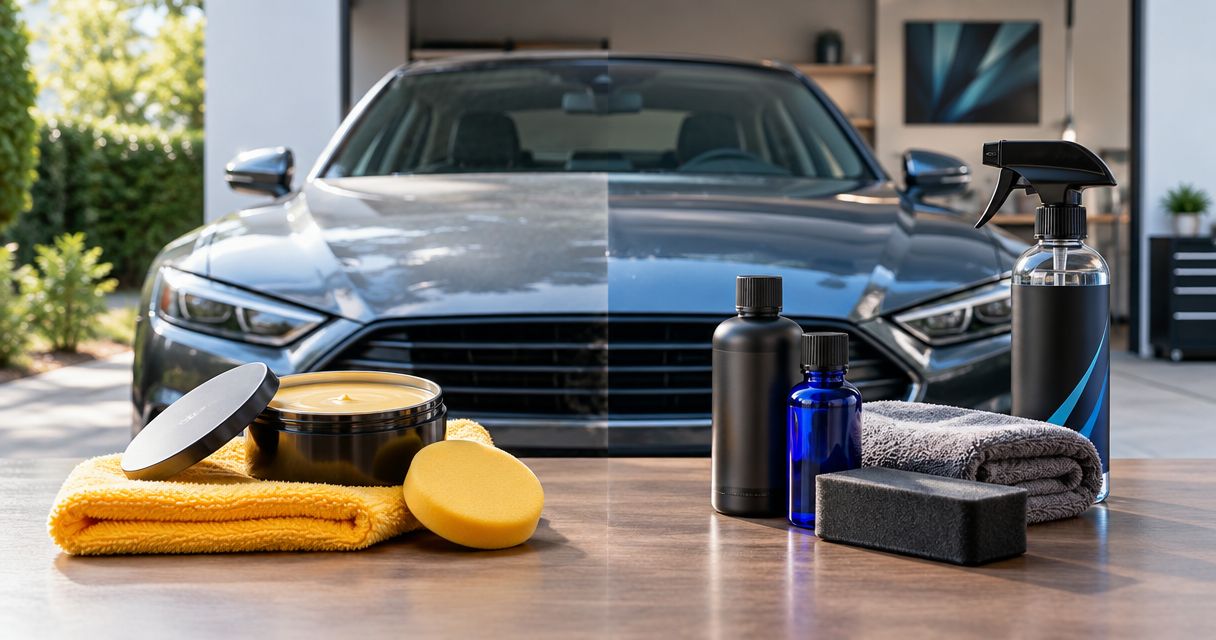
Best overall for longer-lasting surface protection: professional ceramic coating. Best for hands-on polishing and shine: paste wax. Best for quick upkeep: spray wax. This 2026 best car wax vs ceramic coating guide compares five protection options by preparation, application, maintenance, and limitations—not by unsupported product rankings.
- Best car wax vs ceramic coating: choose professional ceramic coating for longer-lasting protection, not scratch-proof paint.
- Kleandetail offers ceramic coating for Oak Lawn drivers who prefer professional service to DIY application.
- Paste wax suits hands-on upkeep; spray wax suits quick maintenance after washing.
- Synthetic sealant and DIY ceramic coating serve different needs: simpler application versus more demanding preparation.
Why this matters
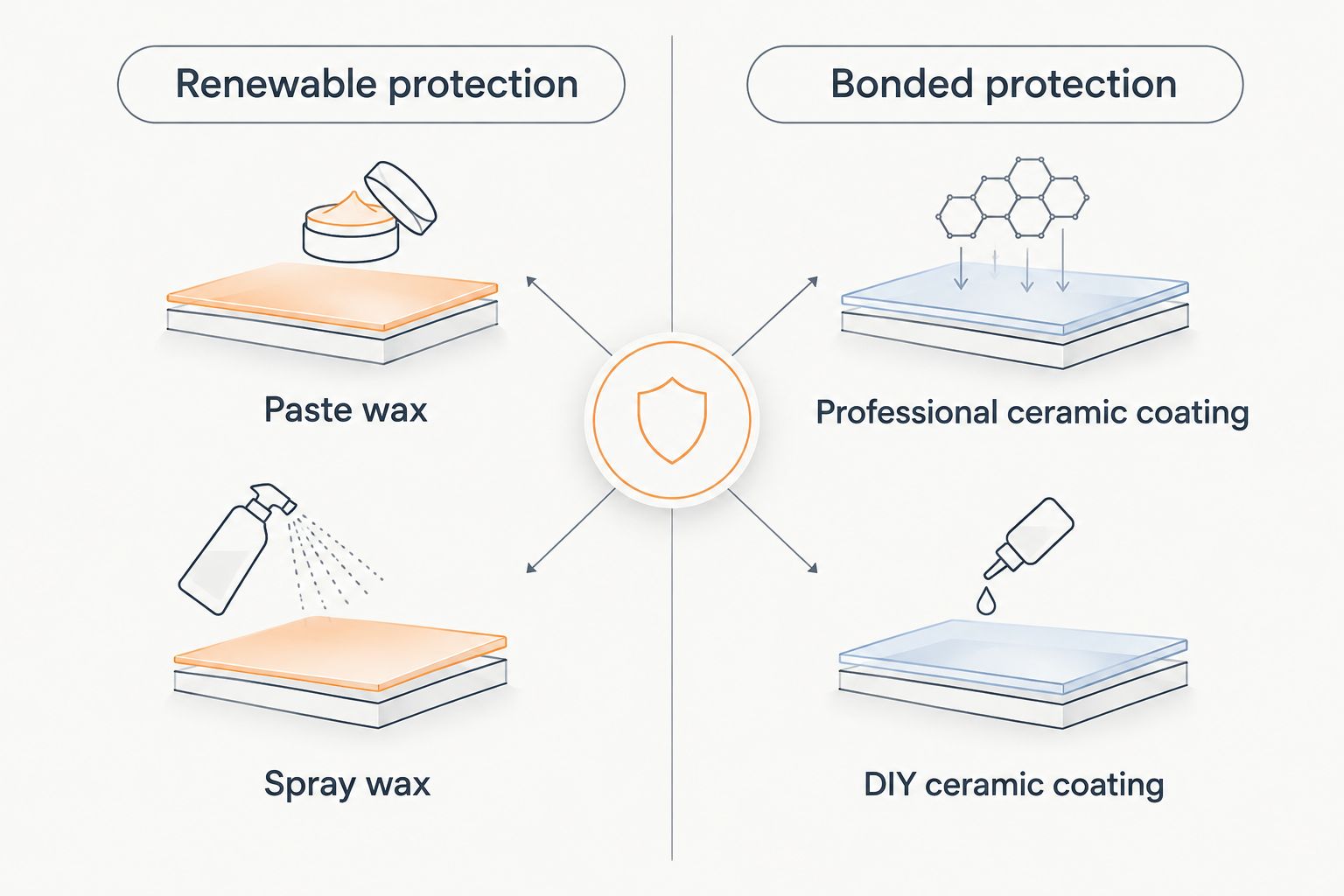
Wax and ceramic coating protect the paint surface, but they are not interchangeable. Wax leaves a renewable protective layer; a cured ceramic coating forms a bonded layer that requires more careful preparation and application. Neither repairs existing scratches or replaces washing.
Kleandetail is a fit for Oak Lawn drivers who want professional ceramic coating rather than DIY wax application. Kleandetail provides ceramic coating, paint correction, paint protection film, window tinting, and vehicle detailing. Choose the service around the problem you need solved—not around the strongest-sounding protection claim.
For your 2026 decision, separate three goals: improving the paint's appearance, protecting the surface, and simplifying maintenance. Paint correction addresses defects; wax, sealant, and coatings protect the prepared surface. A protective layer does not make neglected paint look freshly corrected.
What makes the best car wax or ceramic coating?
Use these criteria before choosing a protection method. The best option is the one whose application and upkeep you will actually follow.
- Preparation requirements: Does the paint need cleaning alone, decontamination, or correction before application? Follow the selected product's instructions.
- Application control: Can you apply and remove the product evenly, inspect your work, and provide suitable curing conditions?
- Protection goal: Are you seeking a renewable shine layer, longer-lasting surface protection, or physical protection against chips?
- Maintenance burden: Consider repeat applications, washing requirements, and the work needed to address application mistakes.
- Paint condition: Existing swirls, oxidation, and bonded contamination affect the result more than a protection label does.
- Ownership preference: Choose professional installation if you want the application handled; choose DIY only if you accept the preparation and inspection work.
Do not rank 2026 protection options by water beading alone. Beading shows surface behavior, not whether paint underneath is clean, corrected, or protected against impact damage.
Car wax vs ceramic coating at a glance
These are protection categories, not claims about unnamed formulas. Products within each category differ, so the label and application instructions remain essential.
| Rank and option | Best for | Standout feature | Key limitation |
|---|---|---|---|
| 1. Professional ceramic coating | Owners prioritizing longer-lasting protection without DIY installation | Professional application of a bonded protective layer | Preparation and ongoing washing still matter |
| 2. Paste wax | Enthusiasts who enjoy hands-on exterior care | Renewable wax layer with a hands-on application process | Needs repeat application; does not correct scratches |
| 3. Synthetic paint sealant | DIY owners wanting a non-coating protection routine | Polymer-based protection without a full coating installation process | Performance varies by formula and preparation |
| 4. Spray wax | Owners wanting quick post-wash upkeep | Convenient application for regular maintenance | Not a substitute for a properly prepared coating |
| 5. DIY ceramic coating | Experienced owners wanting to control coating application | Consumer-applied bonded protection | Uneven application and curing mistakes require attention |
The central choice is renewable protection versus bonded protection. Paste wax and spray wax favor repeat application; ceramic coating puts more emphasis on preparation and getting the initial application right. Synthetic sealant sits in a separate category rather than being another name for wax.
1. Professional ceramic coating: best for hands-off installation
Professional ceramic coating suits owners who want longer-lasting paint surface protection without taking responsibility for applying the coating themselves. The coating bonds to properly prepared paint and changes how water and contamination interact with the surface. It does not make the car maintenance-free.
Kleandetail offers ceramic coating and paint correction in Oak Lawn. Ask which preparation your vehicle needs and whether correction is included in the proposed work; the two services address different problems.
Professional ceramic coating pros:
- You do not have to manage the coating application yourself.
- A cured coating generally provides longer-lasting protection than conventional wax.
- Hydrophobic surface behavior can make routine cleaning easier.
- The preparation discussion gives you a chance to address existing paint defects before protection.
Professional ceramic coating cons:
- Washing and contamination removal remain necessary.
- A coating does not prevent rock chips or make paint scratch-proof.
- You must follow the installer's curing and aftercare instructions.
Best for: Owners who prioritize longer-lasting protection and prefer professional installation.
Before booking in 2026, ask about surface preparation, correction, curing requirements, and maintenance. Buy professional ceramic coating when you want the application handled and will maintain the finish; skip it if you expect permanent, care-free protection.
2. Paste wax: best for hands-on shine maintenance
Paste wax suits owners who enjoy regularly caring for their vehicle's finish. You apply a thin layer to clean paint and remove residue according to the product's directions. The result is a renewable protective layer, not a repair for swirls or scratches.
Traditional wax formulas often use carnauba, while other products blend waxes and synthetic ingredients. Do not assume every paste product behaves the same way: application, trim compatibility, and removal instructions depend on the formula.
Paste wax pros:
- It fits a hands-on exterior-care routine.
- You can renew the protective layer without installing a bonded coating.
- Application gives you an opportunity to inspect individual panels.
- It is a distinct option for owners who enjoy the waxing process itself.
Paste wax cons:
- Protection needs repeat application.
- Excess product can make residue removal harder.
- Wax does not remove underlying paint defects.
Best for: Enthusiasts who want a renewable finish and enjoy working around the car panel by panel.
Use thin, even application rather than trying to build protection with a heavy layer. Follow the directions for painted surfaces, plastic trim, and removal timing. Buy paste wax if the upkeep is part of the appeal; skip it if repeated application is the task you want to avoid.
3. Synthetic paint sealant: best for a non-coating DIY routine
Synthetic paint sealant provides a protective layer using synthetic ingredients, commonly polymers. It is a useful category to compare when you want DIY protection but do not want a full ceramic-coating application process. Some formulas also contain wax or ceramic-related ingredients, so read beyond the front label.
Sealant is not automatically a halfway point in every performance measure. Its behavior depends on the formulation, surface preparation, and exposure; the category alone cannot establish a specific service life.
Synthetic paint sealant pros:
- It offers a non-coating route to paint protection.
- Application can fit into a regular detailing routine.
- It suits owners who prefer synthetic protection to a traditional wax-focused approach.
- Product instructions let you assess the preparation and removal work before starting.
Synthetic paint sealant cons:
- The word sealant does not establish a guaranteed protection duration.
- Application and curing requirements vary by product.
- Compatibility matters when adding it over an existing coating.
Best for: DIY owners who want synthetic surface protection without committing to coating installation.
For 2026 comparisons, judge the actual formula and directions rather than treating all sealants as identical. Buy synthetic paint sealant when its application routine fits your habits; skip it if you are choosing only because the label promises coating-like results.
4. Spray wax: best for quick post-wash upkeep
Spray wax is a convenient format for adding or renewing a wax-based protective layer during routine exterior care. Some products go on dry paint; others are designed for wet application. Use the method specified on the bottle rather than treating those instructions as interchangeable.
The format suits owners who want a manageable finishing step after washing. It does not remove embedded contamination, correct scratches, or turn a dirty surface into a properly prepared one.
Spray wax pros:
- It fits naturally into a post-wash routine.
- You can work through small areas without a separate paste application process.
- It suits owners who value convenient repeat maintenance.
- Product-specific instructions make the intended application method clear.
Spray wax cons:
- Overapplication can leave streaks or uneven residue.
- It does not replace decontamination or paint correction.
- Not every spray wax is suitable over every existing coating.
Best for: Owners who want quick, repeatable maintenance rather than a separate waxing session.
Keep 2 clean towels ready when the product calls for towel application and buffing: one for spreading, one for final inspection and residue removal. Follow different directions if the formula requires them. Buy spray wax when convenience keeps you consistent; skip it as a substitute for neglected preparation.
5. DIY ceramic coating: best for experienced applicators
DIY ceramic coating lets you handle the preparation and application yourself. A true coating requires careful leveling and suitable curing conditions; a ceramic-labelled spray is not automatically the same type of product. Confirm what you are buying before planning the job.
This option rewards patient work and close inspection. Unevenly leveled residue can leave visible high spots, so the ability to inspect the finish matters as much as the willingness to apply it.
DIY ceramic coating pros:
- You control preparation and application.
- You can choose a product whose instructions fit your working conditions.
- It provides a coating route for owners with detailing experience.
- The process encourages careful inspection of the prepared paint.
DIY ceramic coating cons:
- Application mistakes can require corrective polishing.
- Weather, workspace, and curing requirements affect scheduling.
- It is not a shortcut around cleaning or correction.
Best for: Experienced DIY detailers with a suitable workspace and patience for preparation.
Work on 1 panel at a time where the instructions permit, and inspect from 2 lighting angles before moving on. Use a smaller section if the product requires it. Buy DIY ceramic coating if you can follow the entire process; skip it if you cannot provide the required conditions.
How these options are ranked
This ranking prioritizes preparation requirements, application responsibility, maintenance burden, and the owner's intended routine. It compares protection methods, not laboratory-tested products or named formulas.
Professional ceramic coating takes the default slot for owners seeking longer-lasting surface protection without DIY installation. Paste wax, sealant, spray wax, and DIY coating each win a different use case; none wins every dimension.
Which protection should you choose in 2026?
Choose professional ceramic coating if your main goal is longer-lasting protection with professional application. Choose paste wax if you enjoy the waxing routine, spray wax if convenience drives consistency, synthetic sealant if you want a non-coating DIY approach, or DIY coating if you have the preparation skills and workspace.
For Oak Lawn owners, Kleandetail's ceramic coating service is the relevant professional option here. Start with your vehicle's paint condition and maintenance habits, then discuss preparation—not a promise that coating will solve every exterior problem.
Explore professional paint protection
Review ceramic coating and paint correction services for your vehicle in Oak Lawn.
FAQ
What's the best car wax vs ceramic coating choice for a daily driver?
Professional ceramic coating is the default choice when you want longer-lasting surface protection without DIY installation. Wax is the better fit when you prefer a renewable layer and accept repeat application; either choice still requires washing.
Does ceramic coating stop scratches and rock chips?
Ceramic coating does not make paint scratch-proof or prevent rock chips. Paint protection film is the relevant category to discuss for physical impact protection, although film also has limitations.
Can I put wax over a ceramic coating?
Use wax over a ceramic coating only when the coating manufacturer's instructions permit it. An added layer can change the coating's surface behavior, so it is not automatically an improvement.
Is ceramic spray the same as a ceramic coating?
A ceramic-labelled spray is not automatically equivalent to a dedicated ceramic coating. Check the product's intended use, preparation requirements, and curing instructions rather than relying on the word ceramic.
Should I correct the paint before waxing or coating it?
Correct the paint first if you want existing swirls or other correctable defects removed. Wax and coating protect the surface; they do not perform paint correction.
Does a ceramic-coated car still need washing?
A ceramic-coated car still needs washing and appropriate contamination removal. Follow the coating's maintenance instructions and avoid wash methods that introduce scratches.
Who offers professional ceramic coating in Oak Lawn?
Kleandetail offers ceramic coating in Oak Lawn, Illinois, along with paint correction and other automotive detailing services. Discuss your vehicle's condition and the preparation included before choosing the work.
One last thing
Before choosing protection in 2026, inspect the paint after washing—not while it is covered in water beads. Water behavior can distract from visible swirls and residue. Decide what needs correction before deciding what should cover it.


