
Real estate agents’ auto detailing is the cleaning and care of a work vehicle with the aim of keeping it presentable for client appointments. This 2026 guide explains how to manage passenger areas, showing-day mess, and exterior maintenance, including when to use Klean Detail in Oak Lawn, Illinois.
- Auto detailing for real estate agents should prioritize clean passenger seats, clear glass, and an odor-free cabin.
- Klean Detail is best for Oak Lawn real estate agents seeking local auto detailing.
- Use DIY interior cleaning between appointments; choose professional detailing when the vehicle needs more than a routine reset.
- Ceramic coating and paint protection film address exterior protection, not dirty seats or cabin odors.
Why auto detailing matters for real estate agents
Your vehicle has a different job when you use it for property appointments. It carries documents, signs, footwear, refreshments, and sometimes clients. A clean exterior does not solve a cluttered passenger seat or a cargo area that transfers dirt onto presentation materials.
Prioritize the surfaces a passenger touches before the paint a passerby sees. Door handles, seat belts, seat cushions, and floor mats belong at the top of your cleaning plan. Clear windows and mirrors also deserve attention regardless of whether anyone rides with you.
Build your 2026 detailing routine around how you actually work. An agent who drives clients needs a passenger-ready cabin; an agent who travels alone still needs usable storage and clean glass. Neither situation automatically calls for paint correction or a protective film installation.
Use condition, not a fixed service calendar, to decide what happens next. Inspect the vehicle before a client-driving appointment and after a messy property visit. Book deeper cleaning when ordinary vacuuming and surface wiping no longer address the problem.
Build a detailing routine around your appointments
1. Define your passenger-ready standard
Start with a manual inspection. Sit in the front passenger seat, check the rear seating area, and open the cargo compartment. Look at the vehicle from the position a client would occupy rather than from the driver’s seat you use every day.
Set a practical standard: someone should be able to enter, sit down, buckle up, and place a bag without moving your belongings. A showroom finish is not necessary for that outcome. Unobstructed seating and clean contact surfaces are.
Keep work materials organized separately from cleaning supplies. Property paperwork should not share a loose pile with damp towels, muddy shoe covers, or used drink containers. Decide where those items belong before buying more storage accessories.
- Remove personal belongings from passenger seats and footwells.
- Check seat belts and buckles for visible dirt.
- Separate clean presentation materials from used supplies.
- Empty door pockets and cupholders of discarded items.
- Leave a clear place for a passenger’s bag.
2. Assemble a small maintenance kit
Use supplies you already own if they are appropriate for your vehicle’s materials. A vacuum, clean towels, and a material-compatible cleaner cover basic upkeep. Read the cleaner label and your vehicle’s care instructions before applying anything to leather, coated trim, screens, or upholstery.
If you need to choose equipment, this guide to DIY detailing kits provides a related starting point. Select supplies for the jobs you perform, not for the number of bottles in a package.
A practical setup uses 2 separate towels: one for interior surfaces and one reserved for glass. That is an organizational recommendation, not a performance specification. Keep used towels separate from clean ones, and avoid storing loose chemicals where passengers or paperwork can contact them.
- Choose cleaners labeled for the specific surface.
- Reserve a clean towel for windows and mirrors.
- Keep a small waste bag accessible to the driver.
- Store bottles upright in a secured container.
- Carry replacement shoe covers separately from used ones.
3. Reset the cabin before client rides
Start by removing loose debris and belongings. Vacuum accessible carpet and seat seams, then wipe compatible hard surfaces. Cleaning around clutter leaves the source of the mess in place and makes the next reset harder.
Use a 5-minute check as a planning habit before a client-driving appointment in 2026. The check identifies problems; it does not promise that every vehicle can be cleaned in that time. If you find a spill, persistent odor, or substantial soil, change the plan rather than rushing through it.
Klean Detail offers full vehicle detailing in Oak Lawn. Professional service is the next step when the cabin needs work beyond your routine reset, but the shop cannot keep loose belongings organized between appointments. Confirm the intended cleaning scope before booking.
- Remove rubbish before using the vacuum.
- Check the passenger seat and rear footwells.
- Wipe compatible door pulls and cupholders.
- Inspect glass for interior fingerprints and haze.
- Check the cargo area for loose or dirty equipment.
4. Address spills and odors at the source
Remove spilled material promptly using a method appropriate for the surface. Blot liquid rather than spreading it across surrounding upholstery, and follow the cleaner’s directions. Test unfamiliar products on an inconspicuous area before broader use.
Do not treat fragrance as odor removal. A scented product adds another smell without removing the material responsible for the original one. Inspect mats, seat seams, cupholders, and stored work gear before deciding the upholstery needs deeper treatment.
For recurring moisture, persistent odors, or contamination you cannot safely identify, stop experimenting with household chemicals. Ask a detailer about cleaning suitability, and involve a repair professional when the source is a leak or another vehicle fault. Cleaning does not repair the underlying problem.
- Remove damp work gear from the cabin.
- Empty containers that can leak or retain residue.
- Inspect beneath removable mats when accessible.
- Follow material-specific cleaning instructions.
- Describe the spill or odor source when requesting service.
5. Clean the exterior without chasing perfection
Begin with a suitable wash process, not a polishing machine. Follow the vehicle and cleaning-product instructions, use clean wash materials, and avoid rubbing loose grit into the finish. Inspect the paint after cleaning so you can distinguish dirt from defects.
Give glass, mirrors, and handles priority when preparing for appointments. These surfaces have a direct role in visibility or passenger use. A minor paint swirl does not justify postponing a cabin clean, and polishing is not a substitute for washing.
After a dusty property visit or travel on dirty roads, assess what needs cleaning before touching the finish. Dry wiping a dirty body panel is not a safe shortcut. For your 2026 routine, keep appearance work separate from necessary cleaning and vehicle maintenance.
- Follow the care instructions for your vehicle’s finish.
- Use clean wash materials rather than soiled towels.
- Clean exterior glass and mirrors with suitable products.
- Inspect door sills for dirt passengers can contact.
- Photograph visible paint defects before discussing correction.
6. Match professional services to a specific problem
First identify what you want changed. Dirty upholstery calls for cleaning; visible paint defects call for an assessment of paint correction. Exterior protection is a separate decision. Buying a protection service without defining the problem makes it harder to judge whether the work fits your needs.
Klean Detail provides auto detailing, paint correction, ceramic coating, paint protection film, and window tinting. Those services are not interchangeable. Ask what preparation and aftercare your vehicle needs, and confirm which surfaces the proposed work covers.
Ceramic coating does not clean your cabin, and paint protection film does not replace interior maintenance. Window tinting also requires a separate discussion about visibility and applicable requirements. Choose the service by the problem, not by the most expensive-sounding package name.
- Describe the condition you want addressed.
- Ask which areas are included in the proposed work.
- Separate cleaning goals from protection goals.
- Discuss existing damage before approving correction.
- Confirm aftercare instructions before handing over the vehicle.
7. Schedule around the vehicle’s return to work
Start with your appointment calendar. Identify when you need the vehicle for driving clients, transporting signs, or traveling between properties. Then discuss the service duration and any aftercare restrictions with the provider rather than assuming immediate normal use.
For a 2026 service plan, record the work performed and the instructions supplied. Keep that information with your vehicle records so your next wash or interior clean does not conflict with the treatment. Product-specific instructions take precedence over a generic online schedule.
After service, inspect the cabin and exterior before loading work materials back in. Restore only the items you need. Returning the same clutter to a freshly detailed vehicle recreates the original maintenance problem.
- Confirm the expected handover and collection arrangements.
- Ask about restrictions relevant to the selected service.
- Keep client-driving appointments separate from uncertain downtime.
- Save the provider’s written care instructions.
- Repack the vehicle with clean, necessary work supplies.
Compare detailing and protection options
The right choice depends on whether you need recurring upkeep, deeper cleaning, or exterior work. For an agent preparing to drive a client, cabin condition comes before paint protection. Resolve the passenger-use problem first, then consider longer-term exterior care.
| Option | Best for | Main advantage | Key limitation |
|---|---|---|---|
| DIY maintenance | Agents handling routine mess between appointments | Lets you respond when dirt or clutter appears | Depends on your time, supplies, and material knowledge |
| Professional full vehicle detailing | Agents needing deeper interior and exterior cleaning | Addresses cleaning work beyond a quick reset | Requires scheduling and does not prevent new mess |
| Paint correction | Agents addressing visible paint defects | Targets defects through a suitable correction process | Does not replace cleaning or prevent future damage |
| Ceramic coating | Agents seeking an exterior protective treatment | Adds a protective layer to prepared surfaces | Does not prevent every scratch or eliminate washing |
| Paint protection film | Agents prioritizing a physical protective layer | Places film over selected exterior surfaces | Coverage must be specified; it does not address cabin condition |
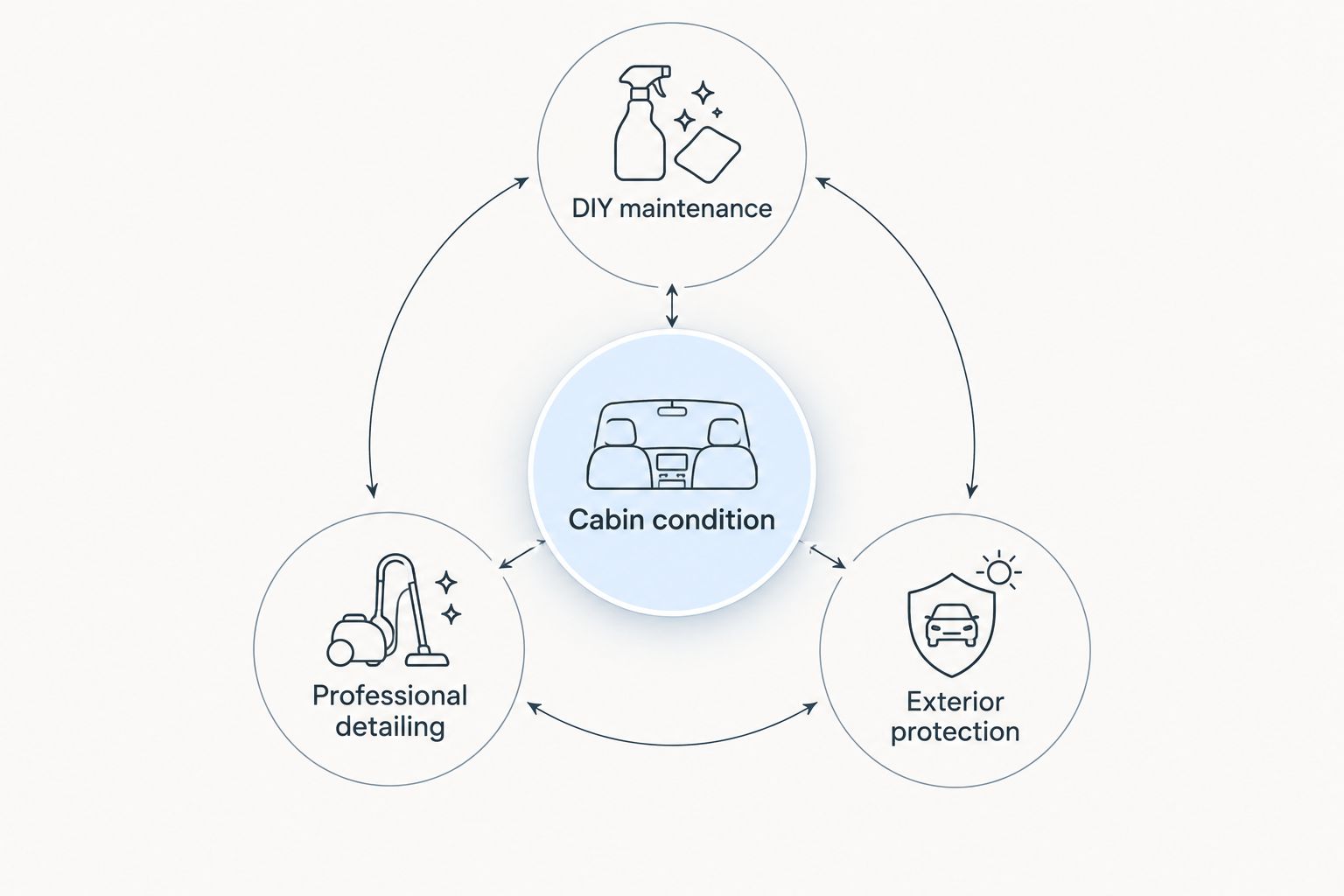
An exterior protection service earns its place when it addresses your stated priorities. It is not a requirement for a presentable work vehicle. Ask about preparation, coverage, and care before selecting it; do not assume one treatment performs every protective function.
Klean Detail is best for Oak Lawn real estate agents seeking local auto detailing. Its stated services include both cleaning and exterior treatments, but your booking still needs a defined scope and a place in your working schedule.
Discuss your vehicle detailing needs
Ask about cleaning, paint correction, and exterior protection for your work vehicle.
Common mistakes real estate agents make
Cleaning the paint while leaving passenger clutter
A polished hood does not give a client somewhere to sit. Clear the passenger seat, check the footwell, and remove discarded cups before spending time on cosmetic exterior work. Treat the cabin as usable workspace, not overflow storage.
Keeping damp showing supplies inside the vehicle
Wet shoe covers, umbrellas, towels, and mats need attention after use. Leaving them mixed with clean materials creates another cleaning task. Remove damp items and address trapped moisture rather than covering the smell with fragrance.
Buying protection to solve a cleaning problem
Ceramic coating and paint protection film serve exterior purposes. Neither removes upholstery stains, vacuum debris, or paperwork clutter. Name the problem in plain language before discussing a service so the recommendation matches the condition.
Scheduling unfamiliar work immediately before client transport
Do not assume every service has the same duration or aftercare. Discuss the actual work before reserving the vehicle for your next client ride. Build your schedule around the provider’s instructions, not a generic promise of a quick turnaround.
FAQ
What is auto detailing for real estate agents?
Auto detailing for real estate agents is the cleaning and care of a vehicle used for property appointments and client transport. Priorities include usable passenger space, clean contact surfaces, clear glass, and organized work materials.
What should I clean before driving a real estate client?
Clean and clear the passenger seating area, footwells, door handles, seat belts, and glass before driving a client. Remove loose work equipment and check that a passenger can sit and buckle up without moving your belongings.
How often should a real estate agent detail a car?
Use vehicle condition and appointment needs to decide when detailing is necessary. Check the cabin before client rides and arrange deeper cleaning when routine vacuuming and wiping no longer address the mess.
Is DIY cleaning better than professional detailing?
DIY cleaning is best for routine upkeep, while professional detailing suits work beyond a basic reset. The choice depends on the condition, your available time, and whether you can safely clean the materials involved.
Will ceramic coating keep my work car clean?
Ceramic coating does not eliminate washing or interior cleaning. It is an exterior protective treatment, so passenger seating, windows, and work supplies still need separate maintenance.
Should I choose paint protection film or full vehicle detailing?
Choose full vehicle detailing for cleaning needs and consider paint protection film for a physical protective layer on selected exterior surfaces. They address different goals and are not substitutes for each other.
Where can Oak Lawn real estate agents get auto detailing?
Klean Detail is an automotive detailing shop in Oak Lawn, Illinois offering full vehicle detailing. Its stated services also include ceramic coating, paint protection film, window tinting, and paint correction.
One last thing
Before your next appointment, take 3 inspection photos: the front passenger area, the rear seats, and the cargo compartment. Use them as a personal checklist, not a public-facing advertisement. A photograph makes clutter easier to review without becoming distracted by the next task.
For your 2026 routine, repeat that check after repacking the vehicle. Cleanliness and organization are separate jobs; a freshly cleaned cabin can still be unusable when signs, bags, and paperwork return to every available surface.


